Competitor Rate Monitoring for Hotels: A Complete Guide to Smarter Pricing Decisions
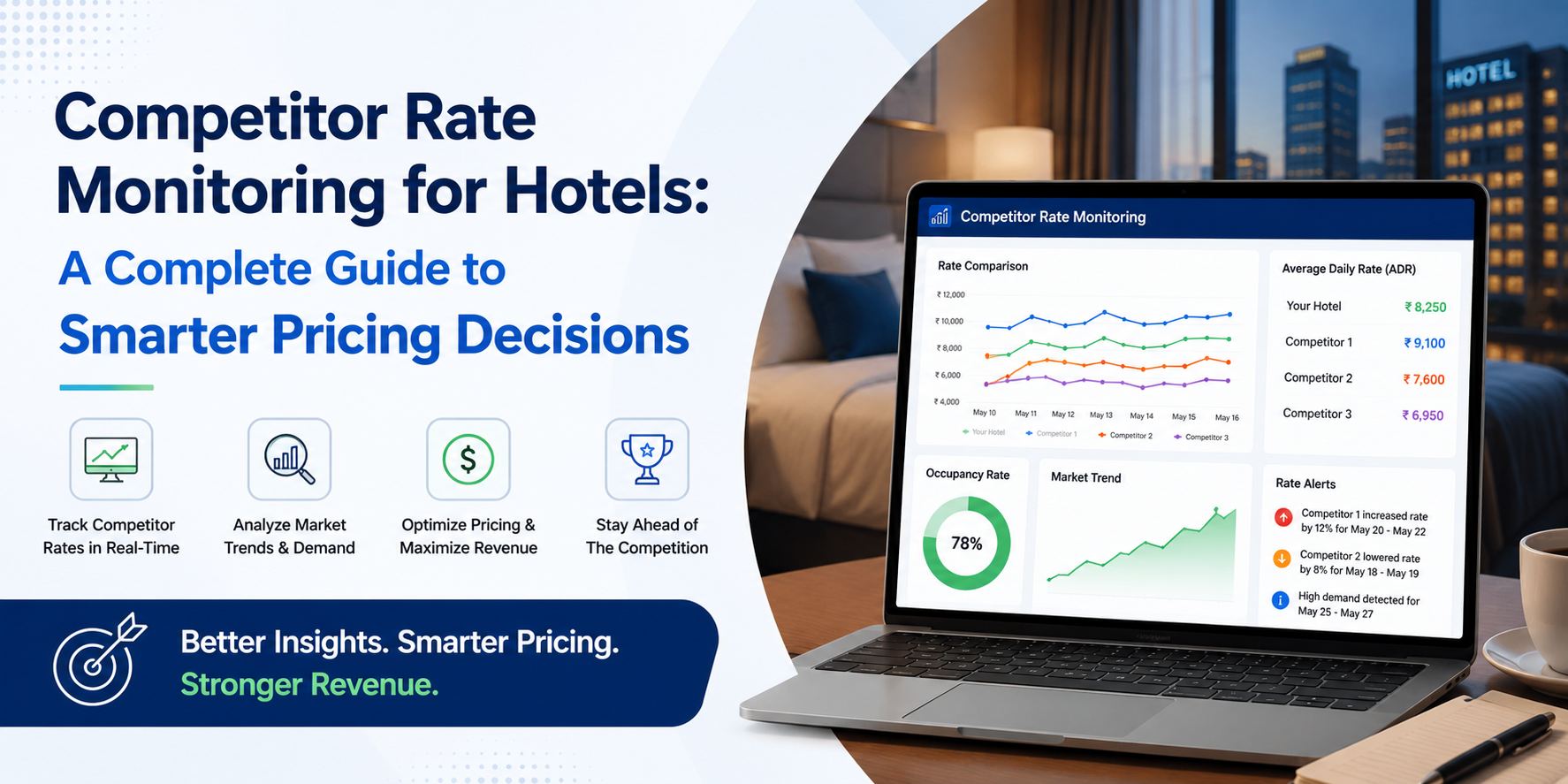
In today's competitive hospitality industry, pricing plays a critical role in attracting guests and maximizing revenue. Travelers compare hotel rates across multiple booking channels before making a reservation, making it essential for hotels to stay aware of competitor pricing strategies. Competitor rate monitoring helps hotels track market rates, identify pricing opportunities, and make informed revenue management decisions.
By continuously monitoring competitor pricing, hotels can adjust rates strategically, improve occupancy, and increase profitability without sacrificing competitiveness.
What is Competitor Rate Monitoring for Hotels?
Competitor rate monitoring is the process of tracking and analyzing room prices offered by competing hotels within a specific market. This includes monitoring rates across hotel websites, online travel agencies (OTAs), and booking platforms.
The objective is to understand how competitor pricing changes based on factors such as seasonality, demand, local events, occupancy levels, and market conditions.
With accurate competitor rate data, hotels can make smarter pricing decisions and maintain a competitive position in the market.
Why Competitor Rate Monitoring is Important
Hotel pricing is constantly changing. Competitors adjust their room rates daily or even multiple times a day based on market demand.
Without competitor monitoring, hotels may:
Price rooms too high and lose bookings
Price rooms too low and lose revenue
Miss opportunities during high-demand periods
Fall behind market trends
Struggle to optimize occupancy levels
Monitoring competitor rates helps hotels stay informed and respond effectively to market changes.
How Competitor Pricing Impacts Hotel Revenue
Guests often compare multiple hotels before making a booking decision. Even a small difference in room rates can influence where a traveler chooses to stay.
When hotels understand competitor pricing, they can:
Adjust rates strategically
Improve booking conversions
Increase average daily rate (ADR)
Maximize revenue per available room (RevPAR)
Strengthen market positioning
Data-driven pricing decisions lead to better revenue outcomes than relying on guesswork.
Common Challenges Hotels Face Without Competitor Monitoring
Many hotels still use manual methods to track competitor rates. This approach creates several challenges.
Limited Market Visibility
Revenue managers may only check a few competitors occasionally, missing important market changes.
Time-Consuming Processes
Manual rate comparisons require significant effort and can consume valuable operational time.
Delayed Decision-Making
By the time pricing changes are identified, competitors may have already captured market demand.
Inaccurate Data Collection
Human errors can occur when gathering rates from multiple websites and booking channels.
Missed Revenue Opportunities
Hotels may fail to identify periods when higher rates could be applied without negatively affecting bookings.
Key Benefits of Competitor Rate Monitoring
Better Pricing Decisions
Real-time competitor data allows hotels to adjust rates confidently based on market conditions.
Improved Occupancy
Competitive pricing helps attract more bookings while maintaining profitability.
Increased Revenue
Hotels can identify opportunities to raise rates during peak demand periods.
Faster Market Response
Hotels can quickly react to competitor promotions and pricing changes.
Stronger Competitive Position
Consistent monitoring helps hotels maintain a strategic advantage in their market segment.
Essential Metrics to Monitor
Successful competitor rate monitoring involves tracking several key performance indicators.
Average Daily Rate (ADR)
ADR measures the average revenue earned per occupied room.
Monitoring competitor ADR provides insight into market pricing trends.
Revenue Per Available Room (RevPAR)
RevPAR combines occupancy and room rate performance into a single metric.
Understanding competitor RevPAR helps evaluate market performance.
Occupancy Trends
Competitor occupancy patterns often influence pricing strategies.
Monitoring demand levels helps hotels adjust rates proactively.
Room Type Pricing
Different room categories may have varying pricing strategies.
Hotels should compare equivalent room types across competitors.
Promotional Rates
Special discounts and promotional offers can significantly impact market competitiveness.
Tracking promotions helps hotels respond effectively.
Factors That Influence Competitor Hotel Rates
Several factors affect how competitors price their rooms.
Seasonal Demand
Hotels often increase rates during peak travel seasons and reduce prices during low-demand periods.
Local Events
Conferences, festivals, sporting events, and holidays can drive higher demand and increased room rates.
Market Competition
The number of hotels operating in a destination directly affects pricing strategies.
Booking Window
Rates often change depending on how far in advance guests book.
Occupancy Levels
Hotels frequently adjust prices based on current and forecasted occupancy.
Understanding these factors helps hotels interpret competitor pricing more accurately.
The Role of OTA Pricing in Competitor Monitoring
Online travel agencies have become major booking channels for hotels worldwide.
Platforms such as:
Goibibo
Expedia
Agoda
display hotel rates that influence traveler booking decisions.
Monitoring OTA pricing provides valuable visibility into how competitors position themselves across various channels.
Why Manual Competitor Monitoring is No Longer Enough
The hospitality market moves quickly. Competitor rates can change multiple times throughout the day.
Manual monitoring creates several limitations:
Inconsistent data collection
Delayed updates
Limited competitor coverage
Increased workload
Reduced accuracy
Modern hotels require automated solutions to monitor competitor pricing effectively.
How Prowen Hotel Analytics Supports Competitor Rate Monitoring
Prowen Hotel Analytics provides a comprehensive platform for competitor rate monitoring and hotel revenue intelligence.
The platform helps hotels analyze competitor pricing across multiple booking channels and gain actionable market insights.
Real-Time Rate Tracking
Monitor competitor rates continuously without manual effort.
Automated Data Collection
Gather pricing information from various sources in a centralized dashboard.
Multi-Channel Monitoring
Track rates across hotel websites and major OTAs.
Market Intelligence Reports
Access detailed reports that reveal pricing patterns and market trends.
Competitive Benchmarking
Compare your hotel's rates against selected competitors to identify opportunities and risks.
Revenue Optimization Insights
Use competitor data to support smarter pricing decisions and maximize profitability.
Building an Effective Competitor Monitoring Strategy
Identify Key Competitors
Select hotels that target a similar audience, location, service level, and price range.
Monitor Daily
Frequent monitoring provides better visibility into market movements.
Analyze Trends
Focus on long-term patterns rather than individual pricing changes.
Track Special Events
Monitor rate fluctuations around local events and holidays.
Use Automated Tools
Technology improves accuracy, speed, and efficiency.
Combine Internal and Market Data
Competitor rates should be analyzed alongside occupancy forecasts and revenue goals.
Competitor Rate Monitoring and Revenue Management
Revenue management depends heavily on understanding market dynamics.
Competitor rate monitoring supports:
Dynamic pricing strategies
Demand forecasting
Market segmentation
Occupancy optimization
Revenue growth initiatives
When integrated into revenue management processes, competitor data becomes a powerful decision-making tool.
Future Trends in Competitor Rate Monitoring
The hospitality industry continues to adopt advanced analytics and automation.
Emerging trends include:
Artificial Intelligence
AI helps identify pricing opportunities faster and more accurately.
Predictive Analytics
Hotels can forecast future competitor pricing trends based on historical data.
Real-Time Revenue Optimization
Automated systems can recommend pricing adjustments instantly.
Advanced Market Intelligence
Hotels gain deeper insights into demand patterns and booking behaviors.
These technologies are transforming how hotels approach pricing strategy.
Best Practices for Maximizing Results
To get the most value from competitor monitoring:
Monitor rates consistently
Focus on relevant competitors
Analyze both short-term and long-term trends
Review OTA pricing regularly
Use automated analytics platforms
Align pricing decisions with revenue objectives
Track market demand continuously
A structured approach leads to more accurate pricing and stronger financial performance.
Conclusion
Competitor rate monitoring for hotels has become an essential component of modern revenue management. Understanding how competitors price their rooms allows hotels to make informed decisions, improve occupancy, and maximize revenue opportunities.
As market conditions change rapidly, relying on manual monitoring methods is no longer sufficient. Automated solutions provide the visibility and intelligence needed to stay competitive in today's hospitality landscape.
With advanced competitor rate monitoring capabilities, Prowen Hotel Analytics enables hotels to track market pricing, benchmark performance, identify opportunities, and make smarter revenue decisions. By leveraging real-time market intelligence, hotels can maintain a competitive edge and drive sustainable revenue growth in an increasingly dynamic marketplace.